Process
Key Design Moments
Five moments shaped the redesign: landing on the record-store metaphor, anchoring it around two personas, restructuring the navigation into four pillars, building a typography system that bridges analog and digital, and the decisions that followed.
01 Finding the Metaphor
The Concept
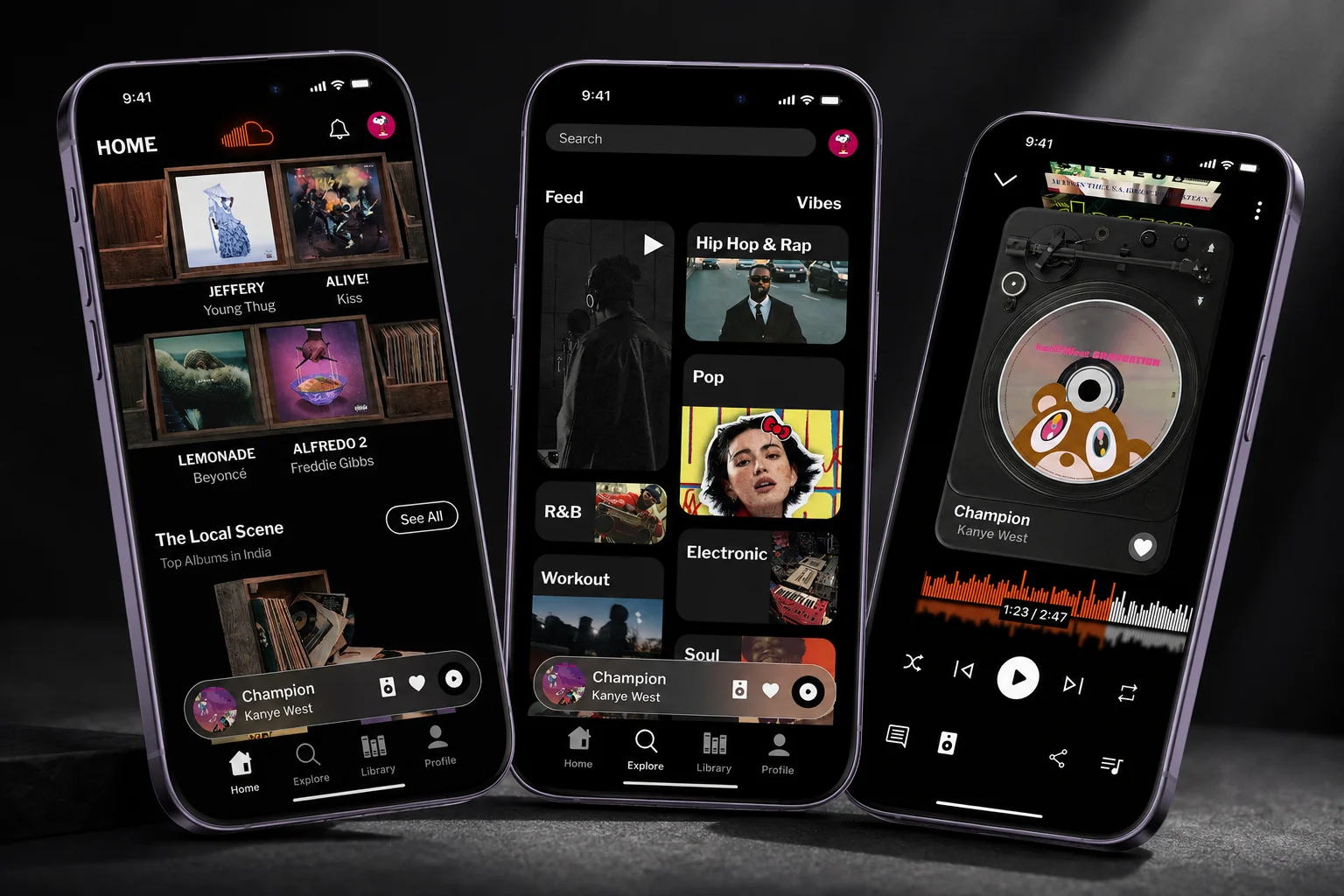
To reclaim SoundCloud's soul, I reimagined the platform as an Underground Record Store — shifting away from the social-media scroll toward a tactile, physical experience that treats every track as a rare artifact and restores the emotional weight of discovery.
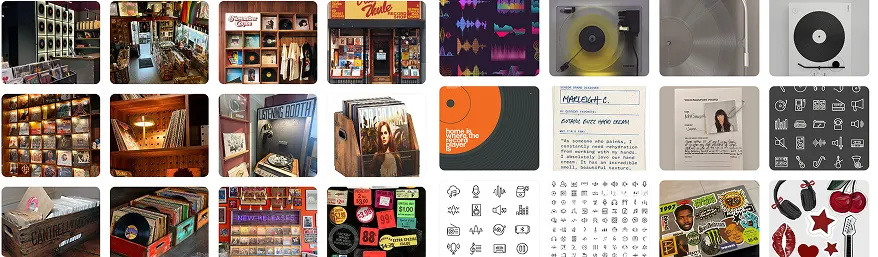 Concept Moodboard
Physical Weight
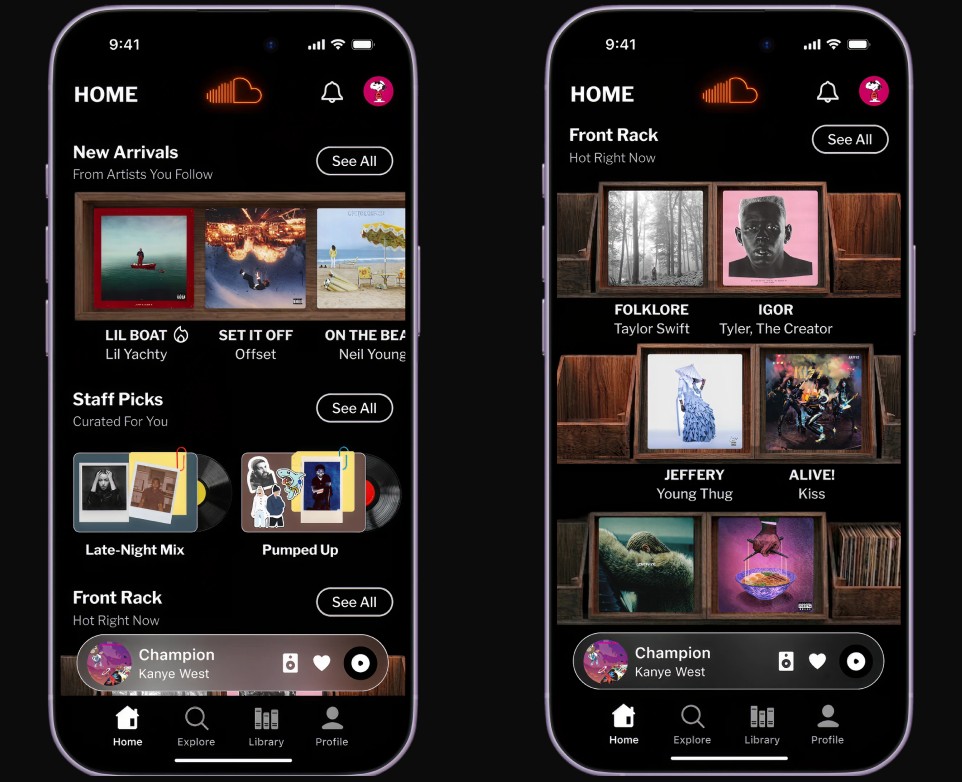
Wood-paneled shelving and tactile layouts treat albums as tangible artifacts, not flat thumbnails.
Neon Identity
The SoundCloud logo rendered in glowing amber neon, replicating the vibrant energy of a storefront sign.
Human Curation
Staff Picks use mixed-media icons — polaroids, paperclips, vinyl — to signal hand-selected recommendations over algorithm.
Premium Stage
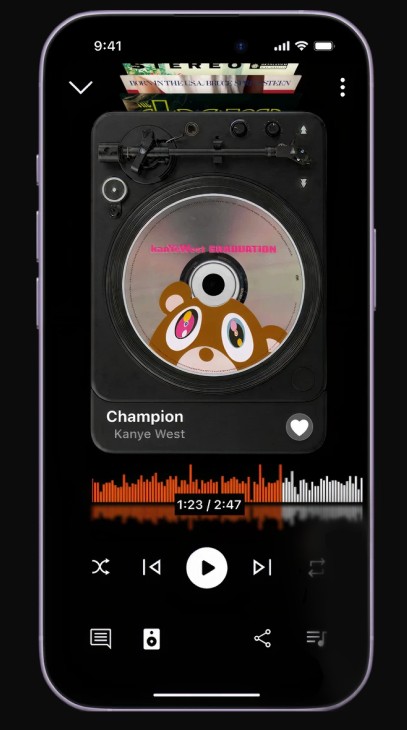
A currently-playing screen built like a high-end turntable setup, giving artists' work the atmosphere it deserves.
02 Anchoring on Real People
Who Walks Through The Door
Rather than designing for generic users, I anchored the concept around two specific personas who define the underground scene.
The Crate Digger
The person who walks in not knowing what they want, but knowing exactly how they want to find it. They're not looking for hits — they're after hidden gems, and they want a space that rewards their curiosity.
The Artist
The creator who treats their music like a physical masterpiece, not a digital file. They don't just want to upload — they want to display their work in a space that feels premium, authentic, and gives them a dedicated corner to host their fans.
✕ A problem I faced
The Wall I Hit: Untangling the Library
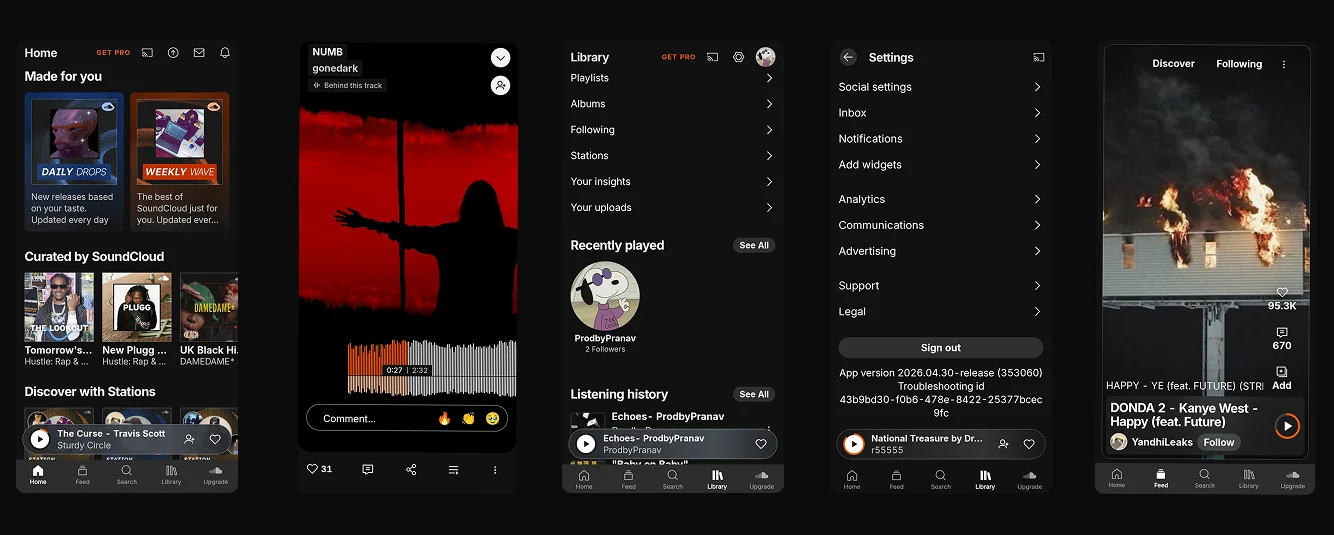
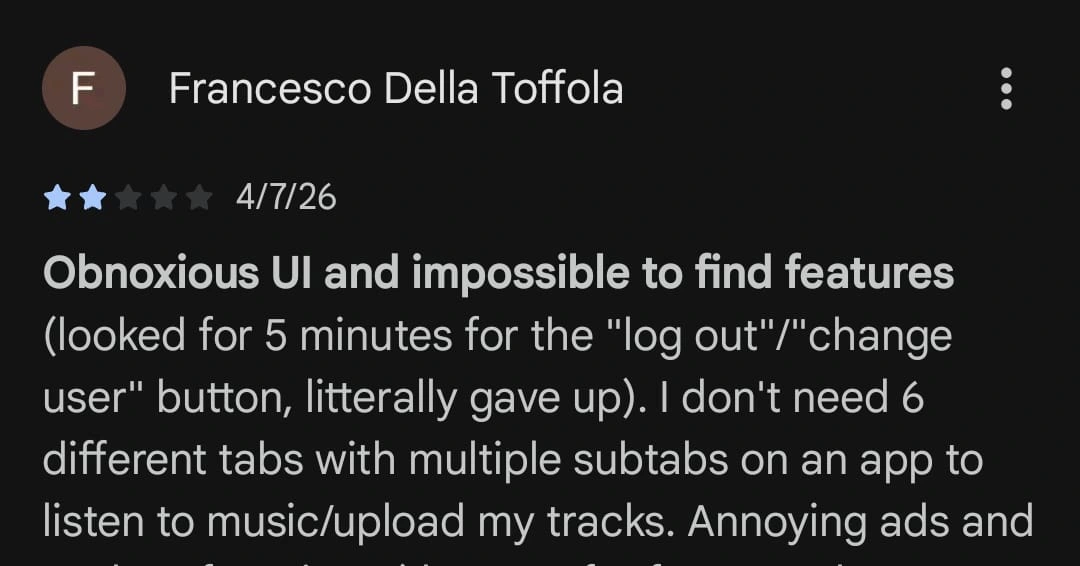
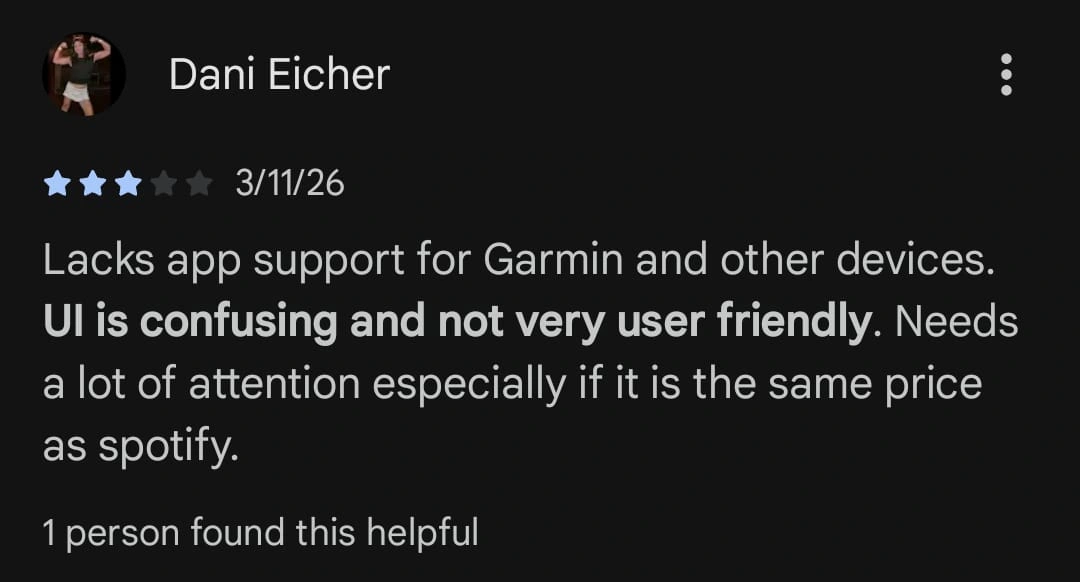
The SoundCloud app jams listener content (playlists, likes) and creator tools (upload stats, tracks) into the same chaotic drawer. Fixing this without bloating the bottom navigation meant a strict structural choice.
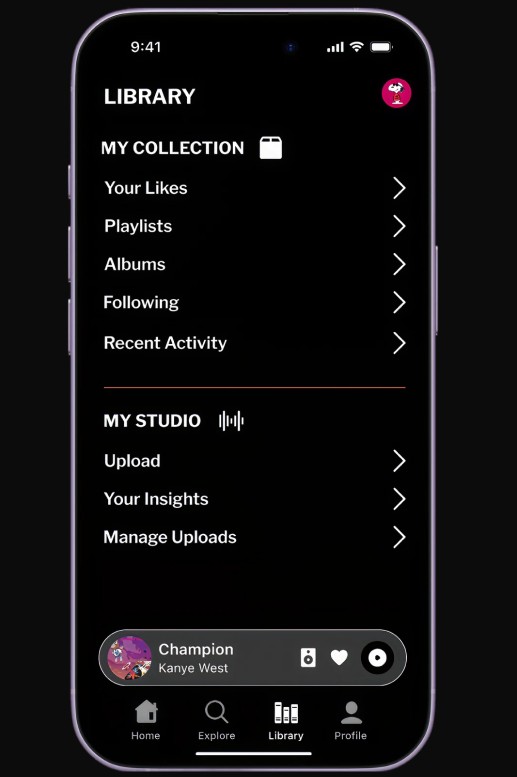
I split the Library tab into two un-mixed zones — My Collection for personal crates, My Studio for creator management — removing the cognitive overload of mixed-intent navigation while keeping both users supported under one roof.
03 Restructuring the Journey
Information Architecture
The new Information Architecture replaces the cluttered social-feed model with four distinct pillars, ensuring the user is never more than two taps from their destination.
Home
Designed for high-curation discovery. Prioritizes "Front Rack" and "Staff Picks" — like walking into a store where the trending and curated work is already on display.
Explore
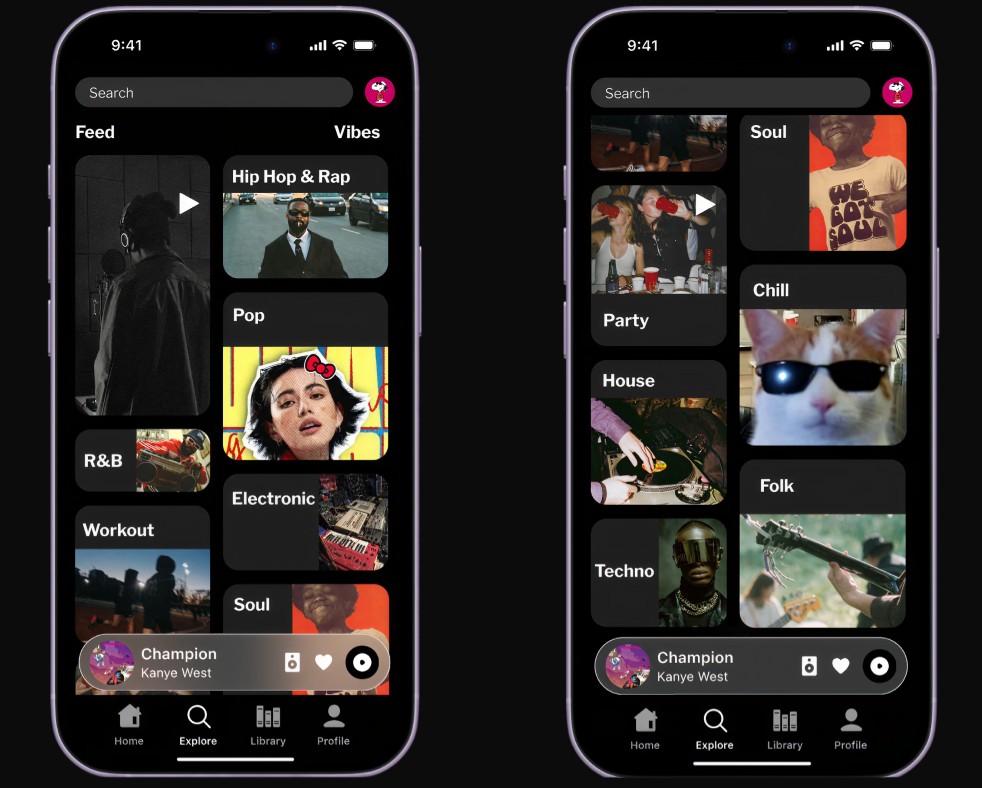
Consolidates Feed and Vibes (genres) into one screen, eliminating navigation layers and restoring the natural flow of discovery with a bento-style tactile layout.
Library
Divided into "My Collection" and "My Studio" — a listener's personal crate on one side, and a full artist upload and insights suite on the other.
Profile
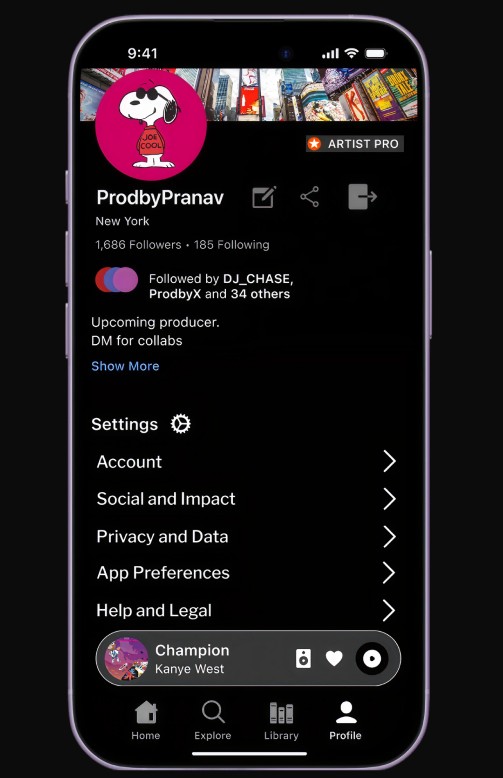
A centralized hub for personalization and settings. Administrative tasks pulled into one column so the rest of the UI stays focused entirely on the music.
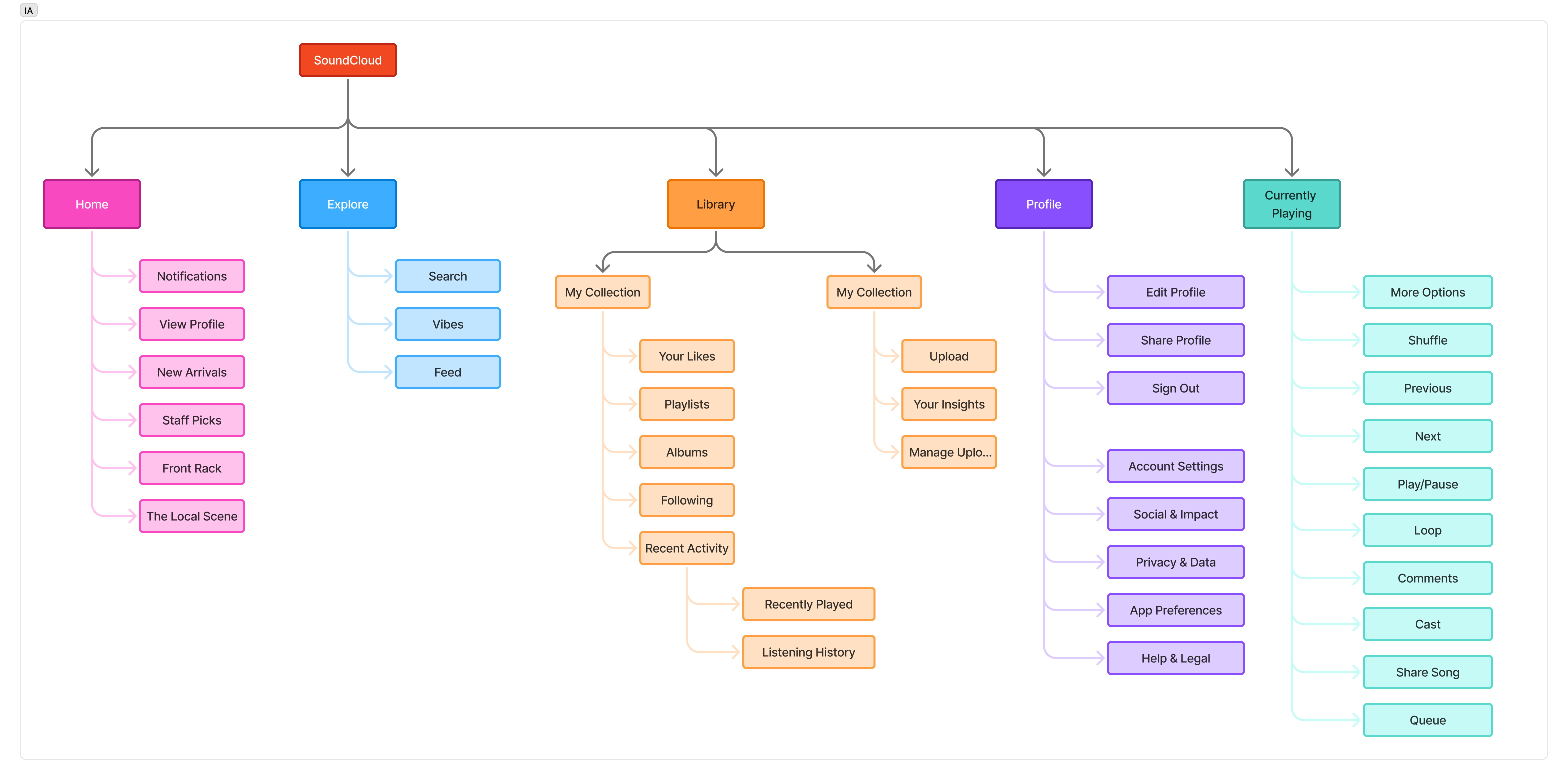 Information Architecture
04 Bridging Analog & Digital
Typography System
Primary — Libre Franklin
Aa Bb Cc
Primary headers. Evokes the bold, stamped authority of industrial label makers and vintage record sleeves. Provides the analog soul.
Functional — DM Sans
Aa Bb Cc
All metadata and functional text. Its precision ensures maximum legibility and a seamless digital flow without competing with the analog aesthetic.
05 Making the Call
From Findings to Design
| Research finding |
Opportunity |
Design response |
| Discovery felt crowded |
Create clearer paths into exploration |
Front Rack, Staff Picks, and curated discovery |
| Listening and creating served different goals |
Separate user intents |
Collection for listening, Studio for creation |
| Genre discovery required more effort |
Make exploration more intentional |
Explore organized around genres, moods, and scenes |
| Navigation mixed too many tasks |
Give each destination a clearer role |
Four-pillar IA across Home, Explore, Library, and Profile |
| Artist identity could get buried |
Give music and artists more visual emphasis |
Artist-led profiles and tactile content spaces |
| Digital interfaces can feel flat |
Bring more character into the listening experience |
Record-store visual language across shelves, vinyl, typography, and physical cues |
These decisions became the foundation for the record-store concept.