Process
Key Design Moments
Seven moments shaped CareLink: fieldwork, a validating survey, synthesis into a clear problem and market gap, How Might We questions, open ideation, a system model, and a grounding storyboard.
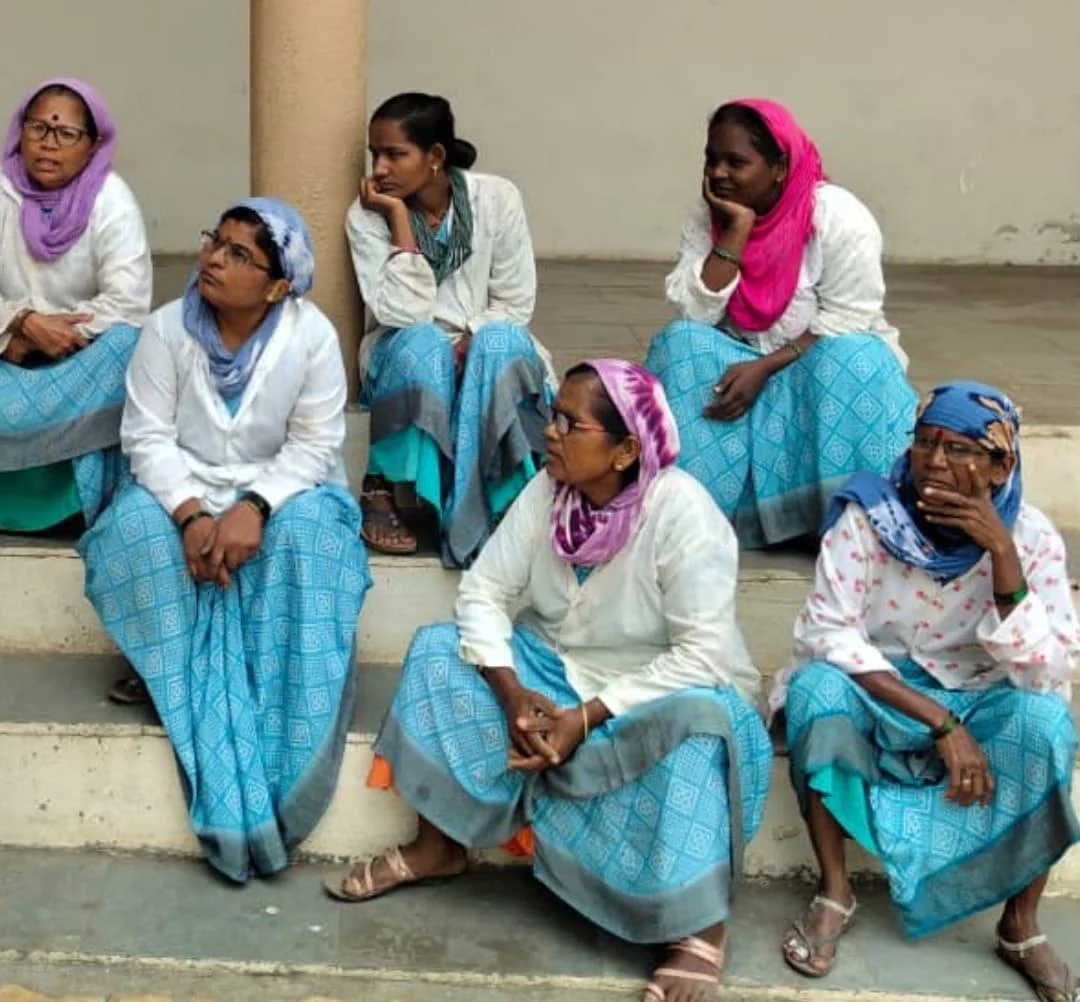
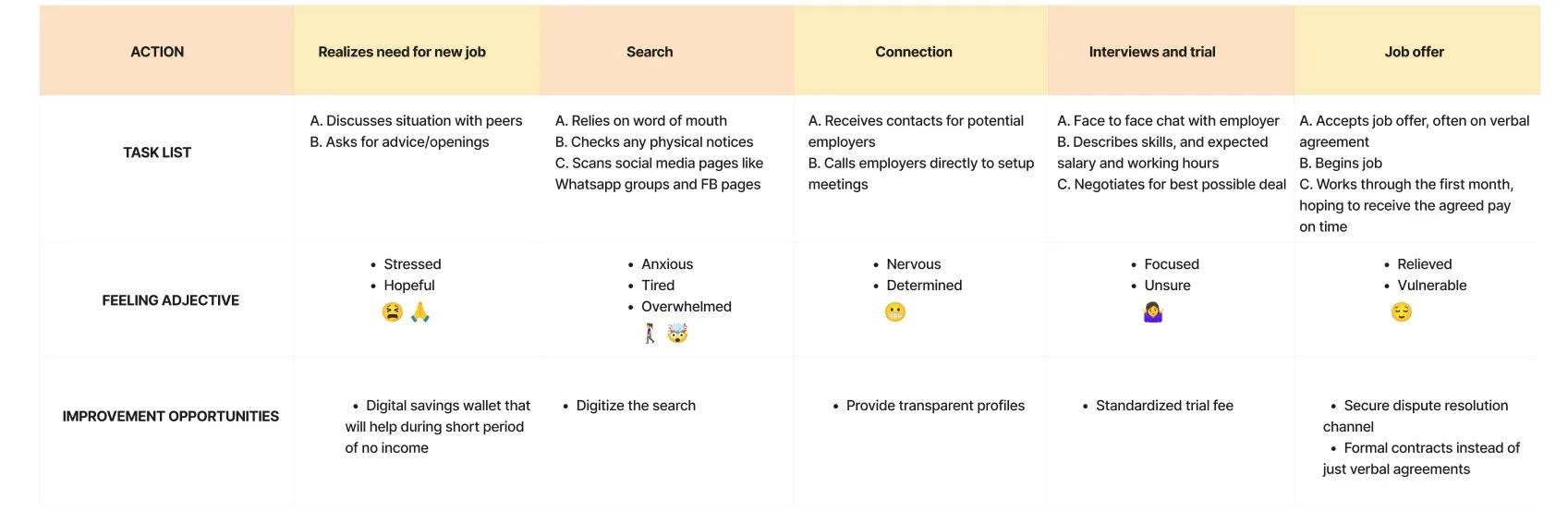
01 Fieldwork Across Stakeholders
Research Approach
To understand the system in depth, we used a mix of qualitative and quantitative methods:
Contextual inquiry (observations + interviews)
Personas and empathy mapping
We studied all three stakeholders:
Domestic Helpers
Workers seeking stable employment, fair wages, and recognition within the system.
Agencies
Intermediaries that connect helpers to households, operating largely through manual, unstructured processes.
Service Receivers
Households and professionals seeking reliable, verified domestic help for their daily needs.
02 Validating With Data
Survey Insights
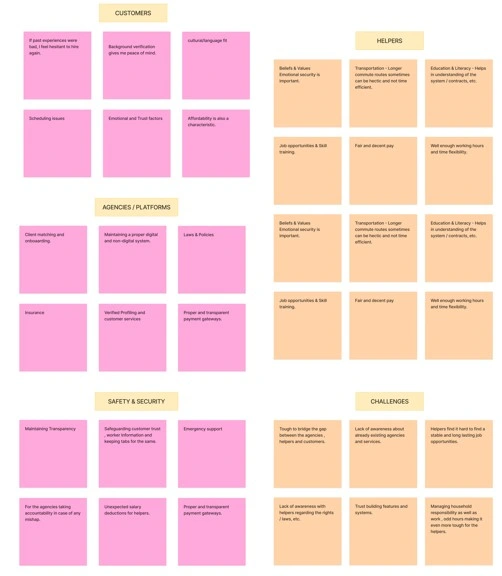
The survey helped validate patterns observed during field research:
Service Receivers
Only about half are satisfied with their current help
Trust and safety are the biggest concerns
Strong need for verification and reliability
Agencies
Operate mostly through manual processes
Depend heavily on walk-ins
Struggle to maintain trust between helpers and customers
Helpers
Face long hours, low wages, and health issues
Seek stability, better pay, and social security
Low awareness limits access to better opportunities
03 Synthesizing the Insights
What This Meant
Four themes emerged from the research:
Trust needs structure
Households wanted confidence in who they were hiring, but the existing system offered little consistent way to verify experience or identity.
Agencies already provide infrastructure
Rather than bypassing agencies, a digital service could strengthen the role they already play in verification, matching, and support.
Transparency has two sides
Households wanted more information about helpers, while helpers needed control over what personal information was exposed and to whom.
Access matters as much as information
A system could only work if helpers could understand, maintain, and benefit from their profiles without needing to become highly digitally literate.
This shifted our opportunity from building another domestic-help marketplace to creating a shared layer of trust between helpers, agencies, and households.
Market Gap
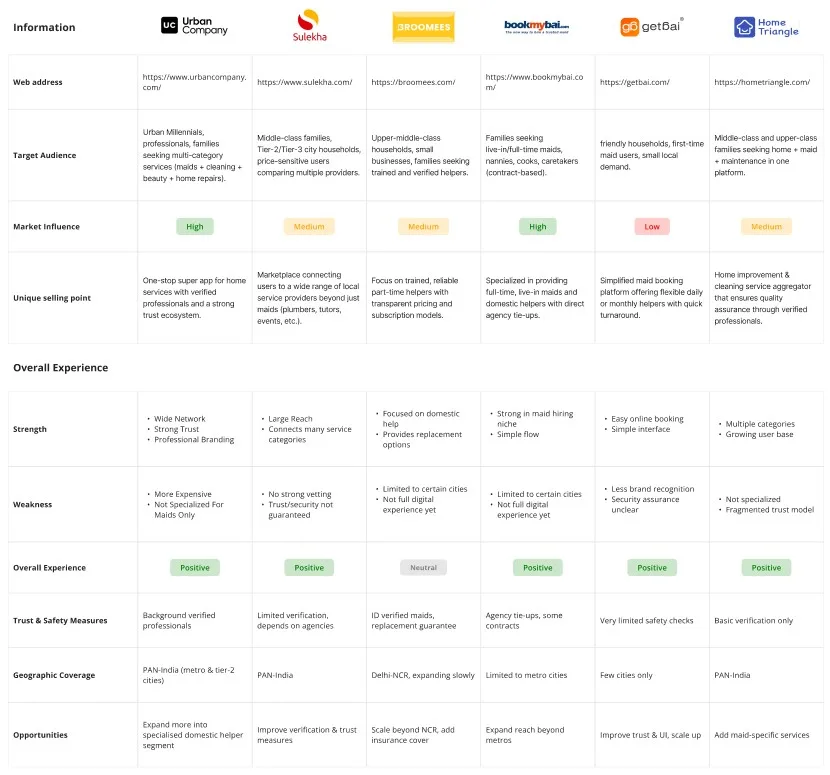
Existing platforms solve parts of the problem but not the system as a whole:
Some focus on verification but are expensive
Some offer discovery but lack trust
Some are local but unstructured
There is a clear opportunity for a system that balances trust + structure + affordability.
✕ A problem we faced
The Wall We Hit: Navigating the Trust-Privacy Paradox
During synthesis, we hit a major design wall: households demanded complete transparency and background checks, but domestic helpers were deeply resistant to digitizing their personal documents due to privacy fears and institutional distrust.
Rather than forcing a standard digital KYC that would have alienated the helpers, we pivoted the system architecture toward agency-backed trust badges and masked verification, balancing employer safety with helper protection before moving into our core direction.
04 Framing the Direction
How Might We
Our research revealed a clear opportunity for a system that balances trust, structure, and affordability. These questions guided our design direction:
Transparency
How might we create a transparent and trustworthy hiring system without compromising personal data privacy or intimidating vulnerable workers?
Awareness & Access
How might we improve awareness and access for domestic helpers?
Conflict Support
How might we support both helpers and employers in case of conflicts?
Structure
How might we bring structure and agency-backed safety to an otherwise informal, high-friction ecosystem?
05 Open Ideation
Ideation
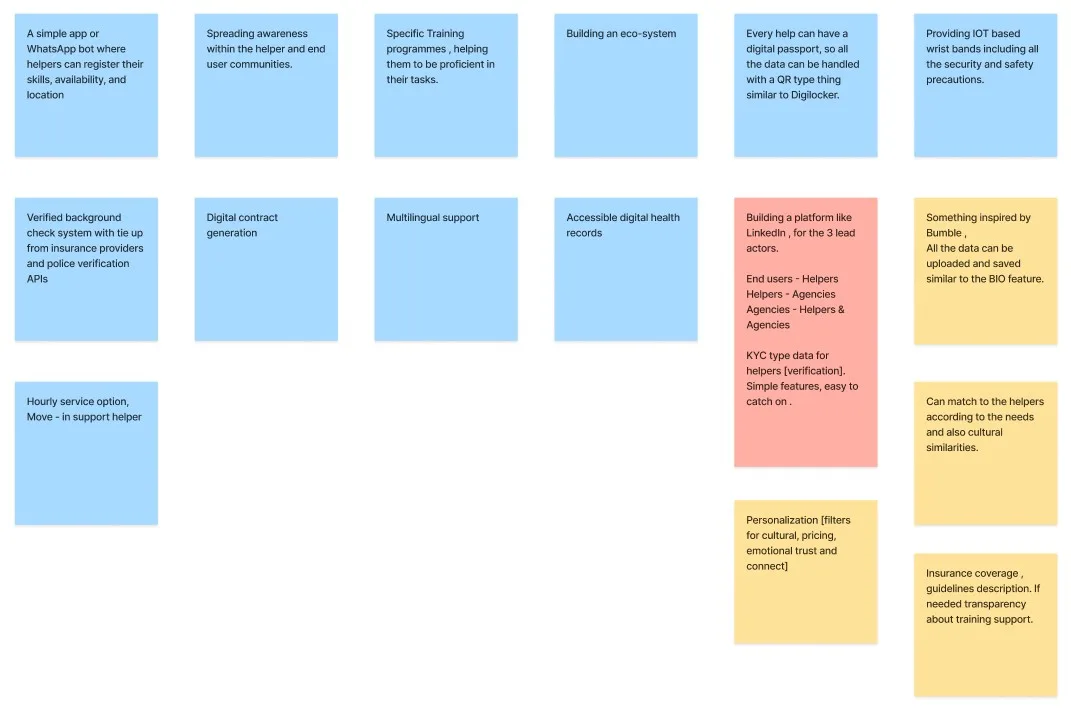
We explored multiple directions through a combination of structured and generative methods to surface patterns, themes, and potential interventions:
Key opportunity areas emerged:
Trust & Verification
Wage Transparency
Structured Onboarding
Communication Clarity
Dispute Resolution
Job Stability
Concepts Explored
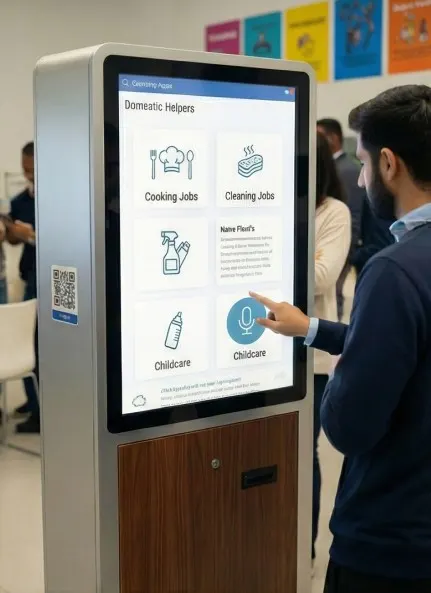 Smart hiring kiosks
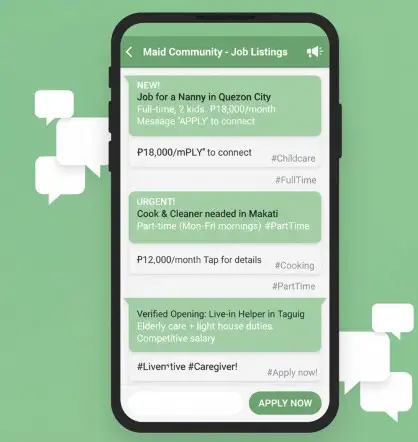 WhatsApp community-based hiring model
06 Modeling the Ecosystem
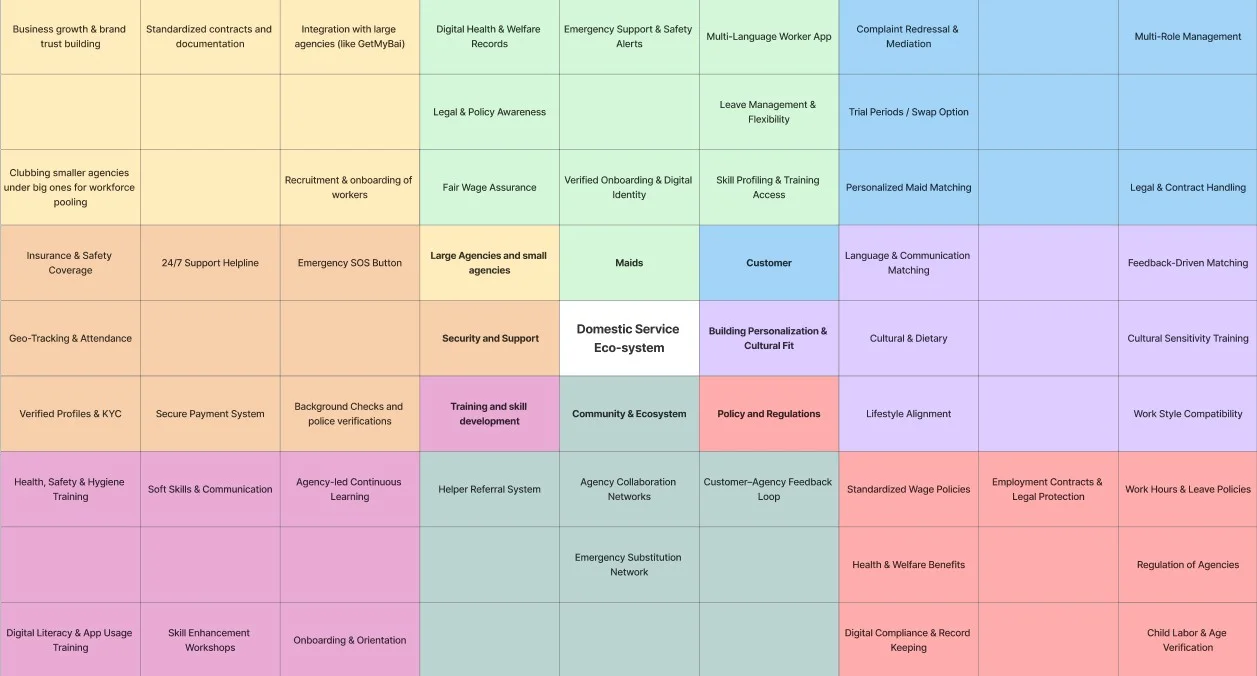
Designing for the System
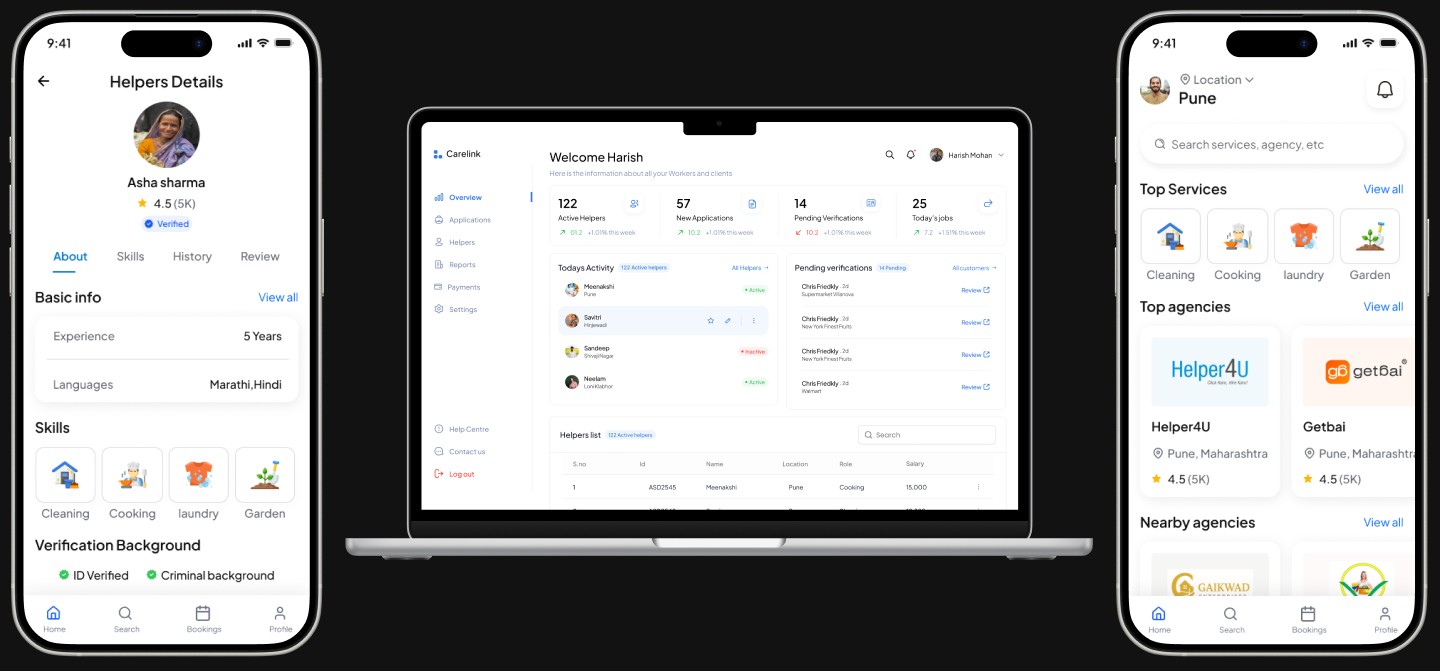
CareLink sits between three groups that already depend on one another:
Helpers
Need access to opportunities, control over their information, and a reliable record of their experience.
Agencies
Provide verification, matching, and ongoing support, but often manage this information manually.
Households
Need confidence that the person they hire is experienced, verified, and available.
Rather than replacing these relationships, we designed CareLink to connect them.
Helpers
↔
Agencies
↔
Households
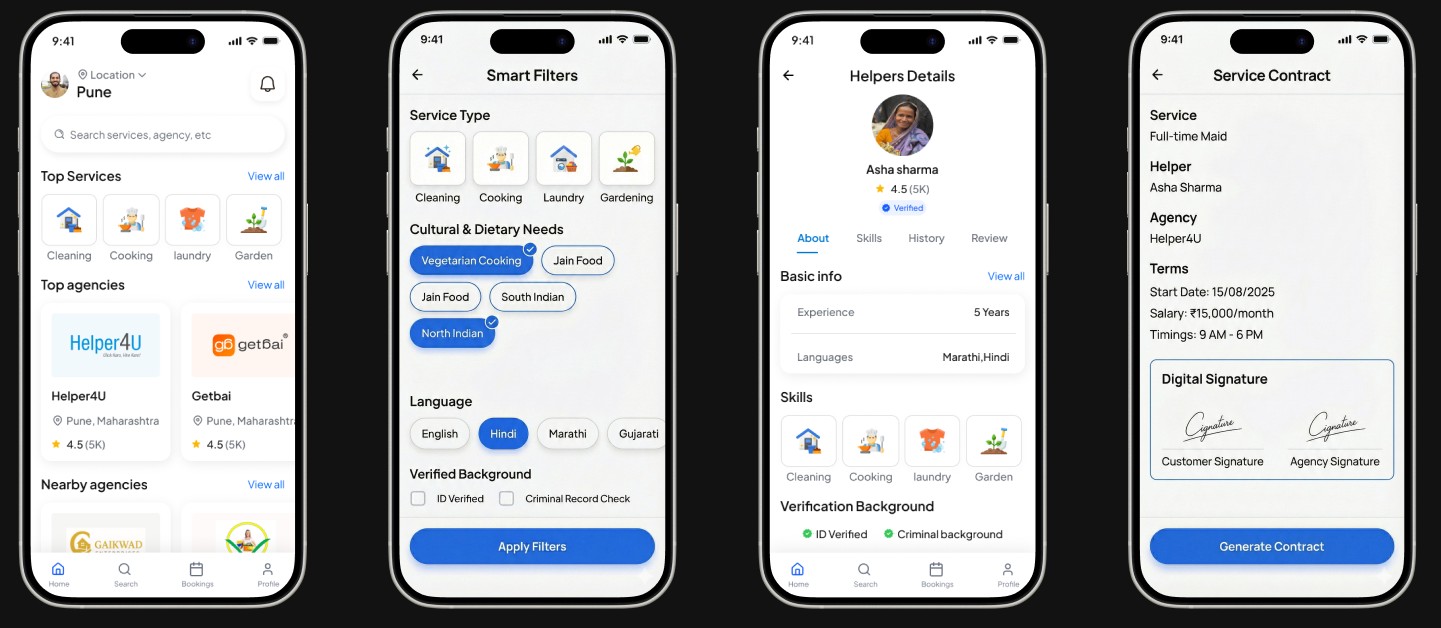
The agency becomes a trusted verification layer, while CareLink gives each participant a clearer way to access and exchange information.
07 Grounding the Concept
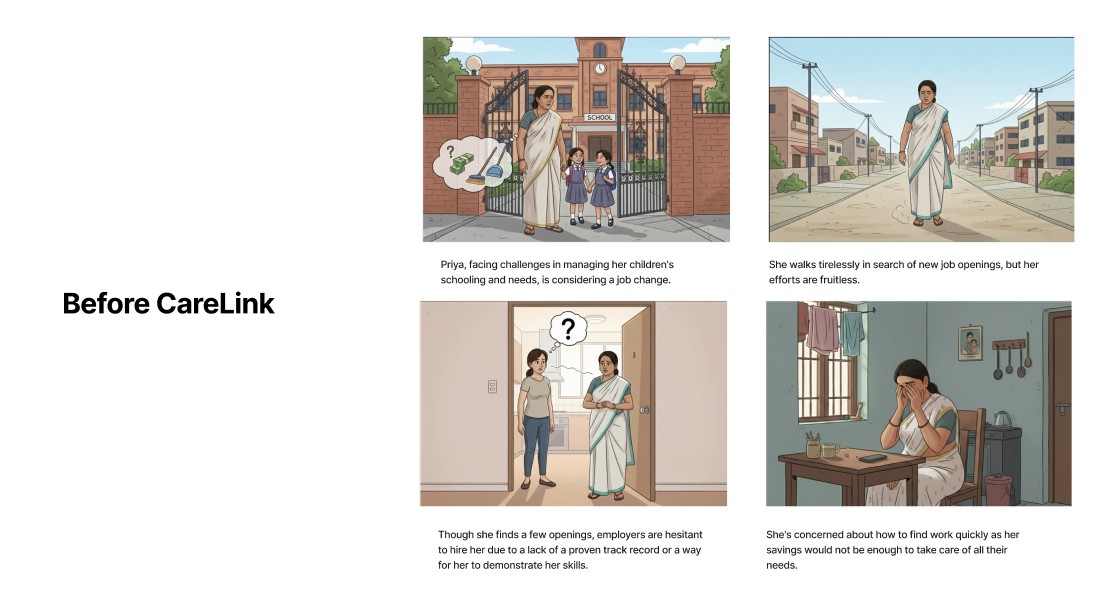
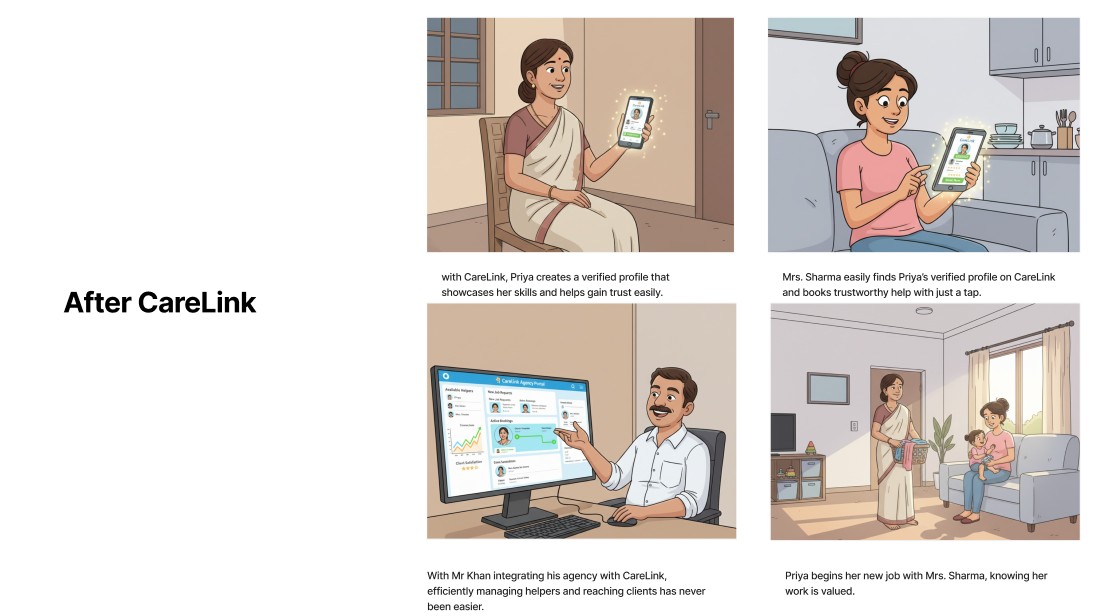
Storyboard
To ground the concept in real life, we developed a storyboard tracing the journey of a helper and an employer from first contact through resolution of a conflict, using CareLink at every step.