Scroll to top
Back

Domestic Helpers

Rethinking Trust, Structure & Access in an Informal System

2025

Overview

Domestic helpers are an integral part of many households, yet the systems that support their hiring, onboarding, and daily work remain informal, fragmented, and often inequitable. CareLink is a service design project that examines this ecosystem and proposes a connected platform that brings structure, transparency, and trust to all stakeholders involved.

Early Observations

Before diving into full research, we conducted a pilot study to understand how the system currently works. Some patterns became clear early on:

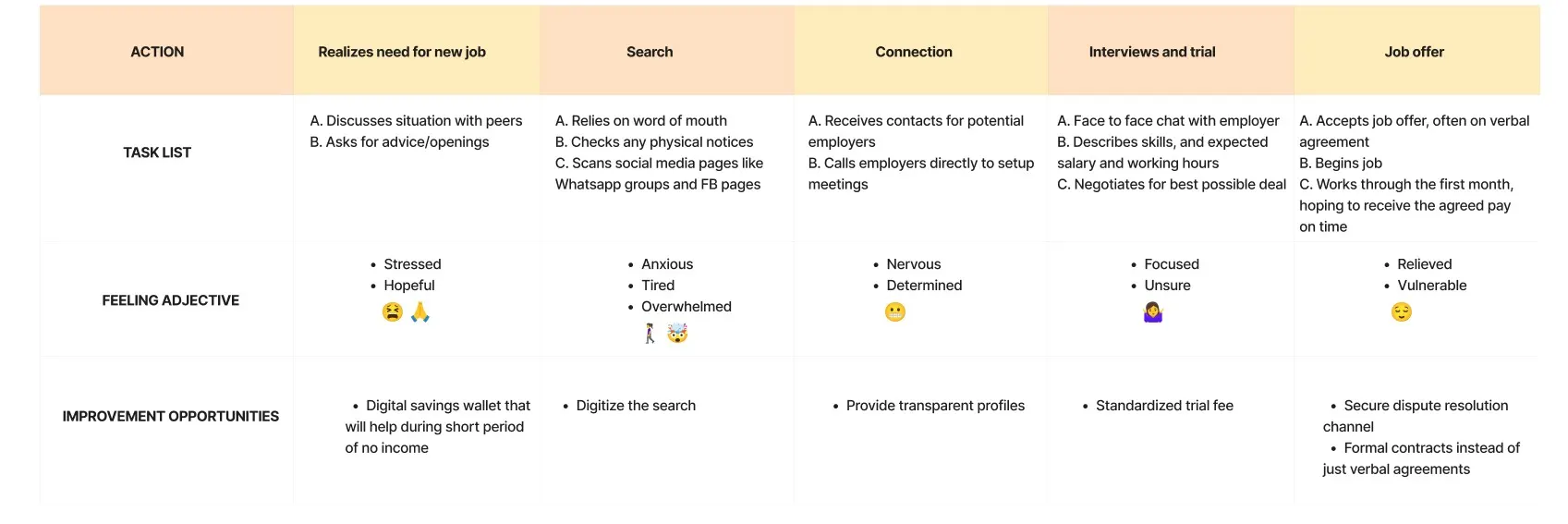
Helpers rely heavily on informal methods like going door-to-door or asking security guards for work
Wages vary significantly for similar work due to lack of standardization
Agencies exist, but many helpers are unaware of them or don't understand their role
Customers prioritize safety, but have limited ways to verify helpers
There is no structured system connecting helpers, agencies, and customers - everything runs on fragmented networks

This made it clear that the issue is not lack of demand, but lack of structure and awareness.

Research Approach

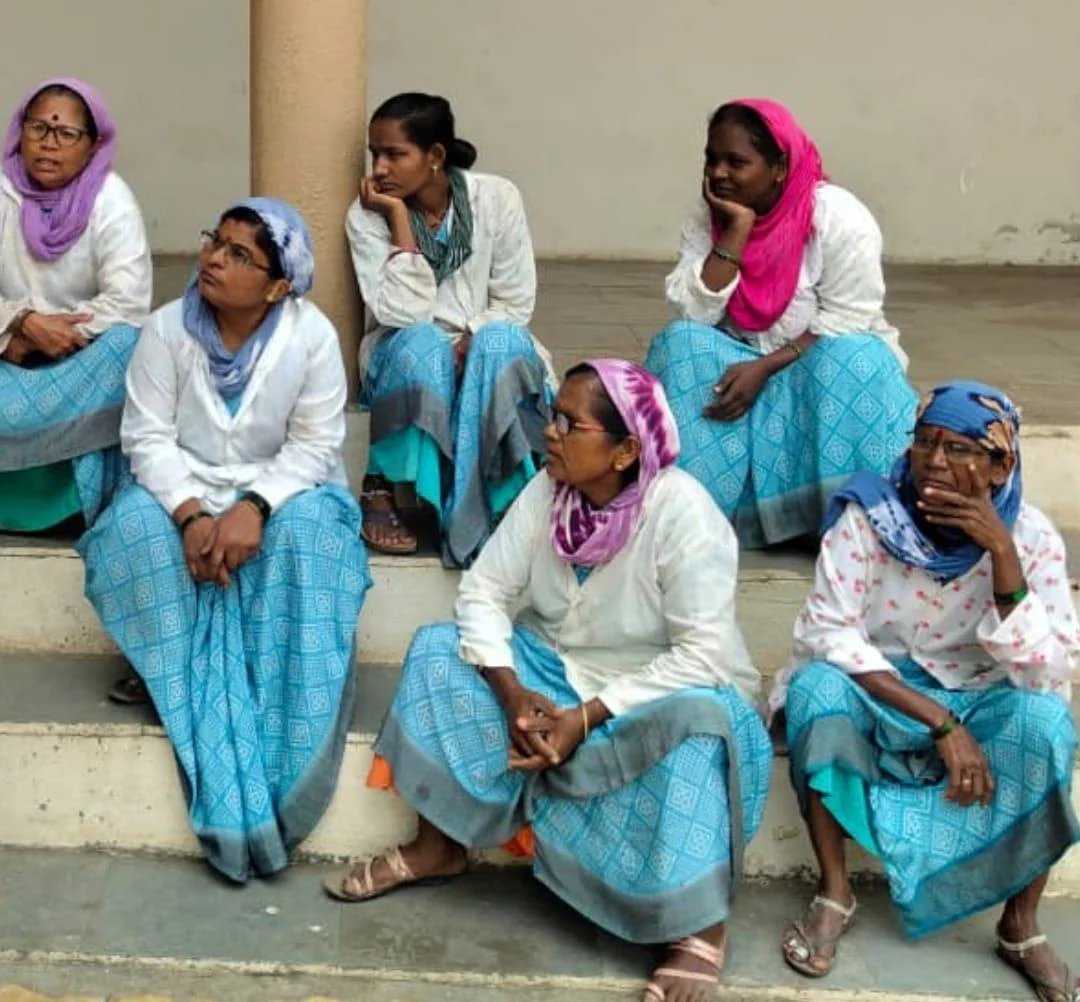
To understand the system in depth, we used a mix of qualitative and quantitative methods:

We studied all three stakeholders:

Domestic Helpers

Workers seeking stable employment, fair wages, and recognition within the system.

Agencies

Intermediaries that connect helpers to households, operating largely through manual, unstructured processes.

Service Receivers

Households and professionals seeking reliable, verified domestic help for their daily needs.
Research 1 Research 2 Research 4

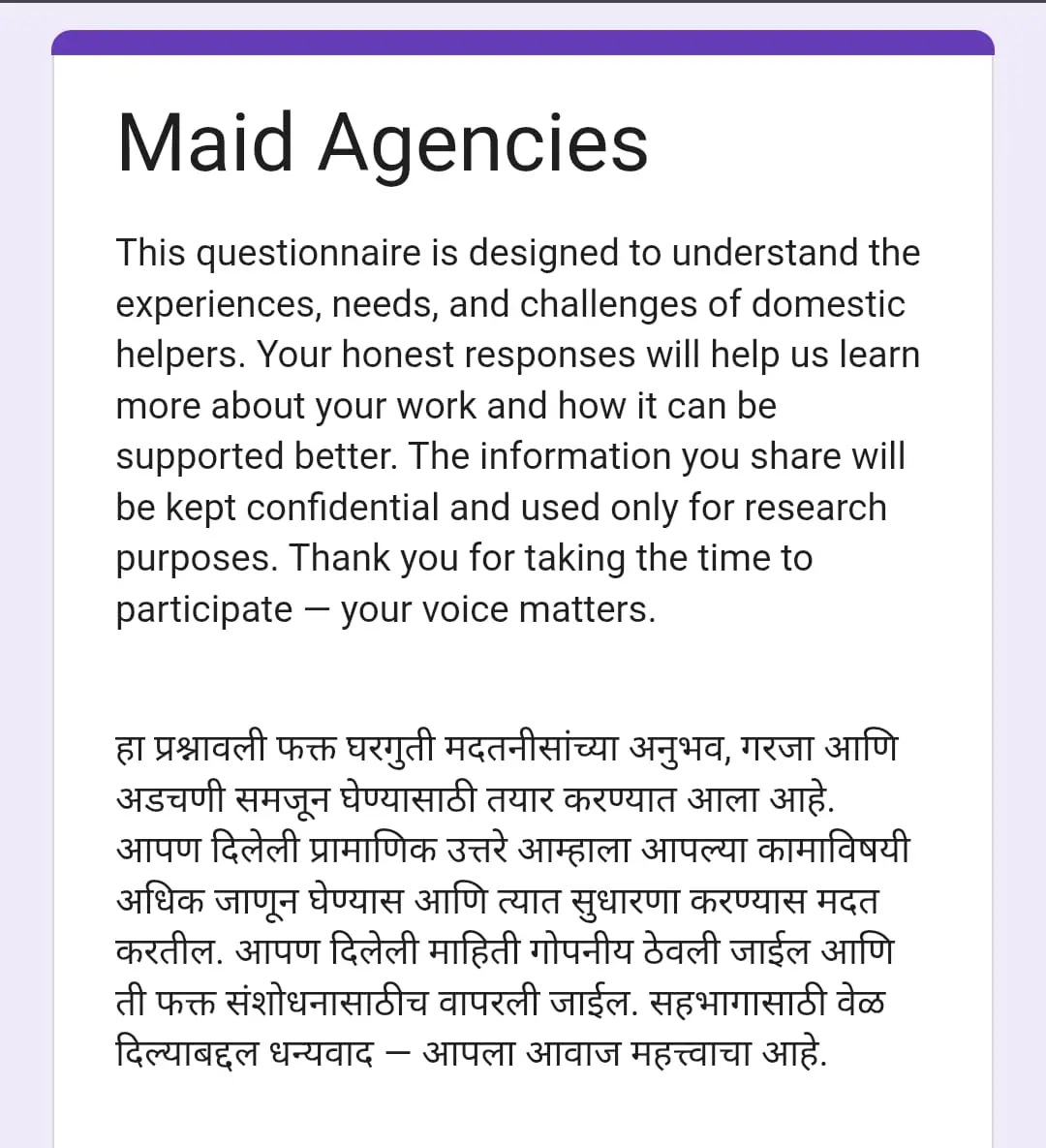
Survey Insights

The survey helped validate patterns observed during field research:
Service Receivers
  • Only about half are satisfied with their current help
  • Trust and safety are the biggest concerns
  • Strong need for verification and reliability
Agencies
  • Operate mostly through manual processes
  • Depend heavily on walk-ins
  • Struggle to maintain trust between helpers and customers
Helpers
  • Face long hours, low wages, and health issues
  • Seek stability, better pay, and social security
  • Low awareness limits access to better opportunities
Survey Insight 1

Market Gap

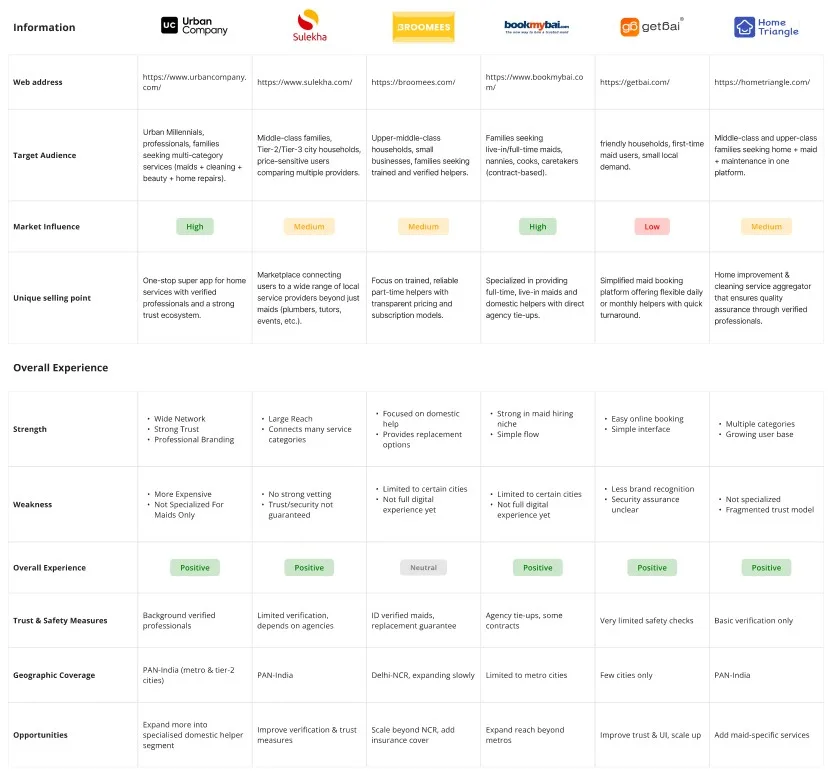
Existing platforms solve parts of the problem but not the system as a whole:

Some focus on verification but are expensive
Some offer discovery but lack trust
Some are local but unstructured

There is a clear opportunity for a system that balances: trust + structure + affordability.

Key Insights

The system is not broken due to lack of demand, but due to lack of structure and awareness
Trust is critical for customers, yet there is no reliable verification mechanism
Helpers often accept unfair conditions due to financial pressure and lack of alternatives
Agencies act as intermediaries but lack standard processes and transparency
The ecosystem is fragmented, with no unified system connecting all stakeholders

Problem Statement

Domestic helpers in Pune miss out on stable and reliable job opportunities because they rely heavily on informal networks and lack awareness of structured agency systems. At the same time, both helpers and service receivers face issues of trust, safety, and lack of support in case of disputes.

How Might We

Our research revealed a clear opportunity for a system that balances trust, structure, and affordability. These questions guided our design direction:

Transparency
How might we create a more transparent and trustworthy hiring system?
Awareness & Access
How might we improve awareness and access for domestic helpers?
Conflict Support
How might we support both helpers and employers in case of conflicts?
Structure
How might we bring structure to an otherwise informal ecosystem?

Ideation

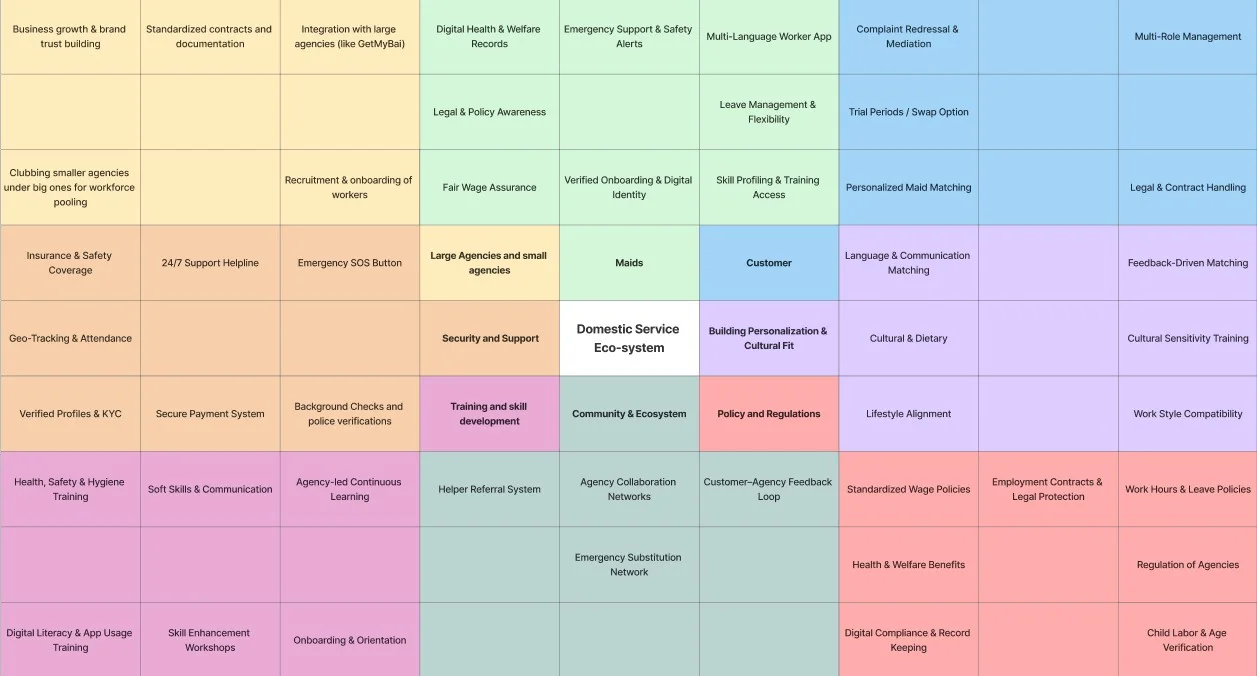
We explored multiple directions through a combination of structured and generative methods to surface patterns, themes, and potential interventions:
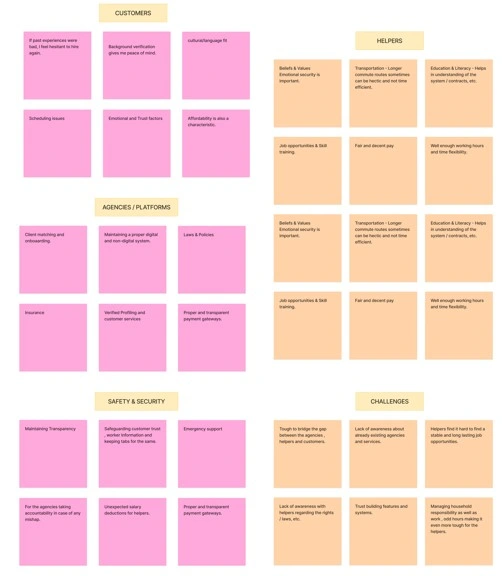
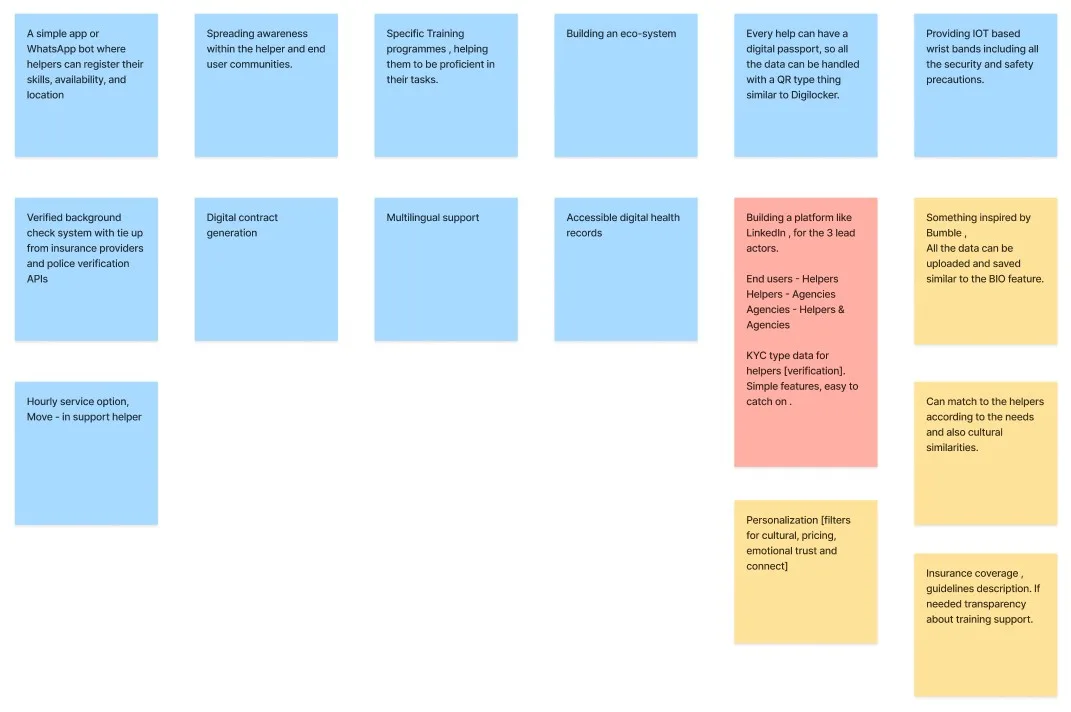
  • Affinity mapping
  • Brainstorming
  • Lotus blossom diagram
Affinity Mapping Brainstorming Lotus Blossom Diagram

Key opportunity areas emerged:

Trust & Verification Wage Transparency Structured Onboarding Communication Clarity Dispute Resolution Job Stability

Concept Development

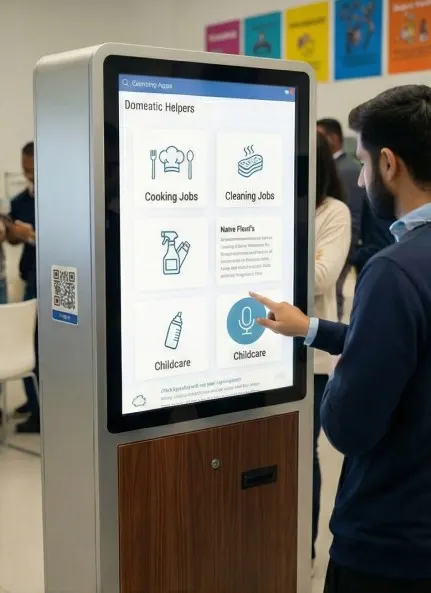
Smart hiring kiosks
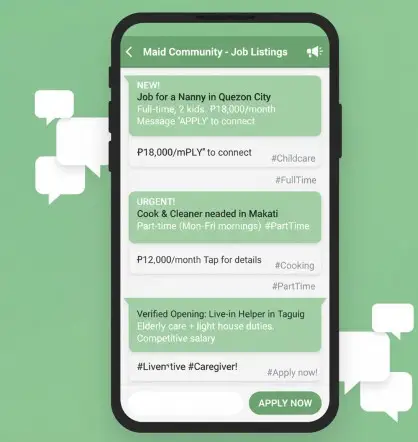
Whatsapp community based hiring model
Smart hiring kiosks
Whatsapp community based hiring model

Final Solution

Instead of just a regular app, we designed a connected system that brings all stakeholders together. Core elements include:
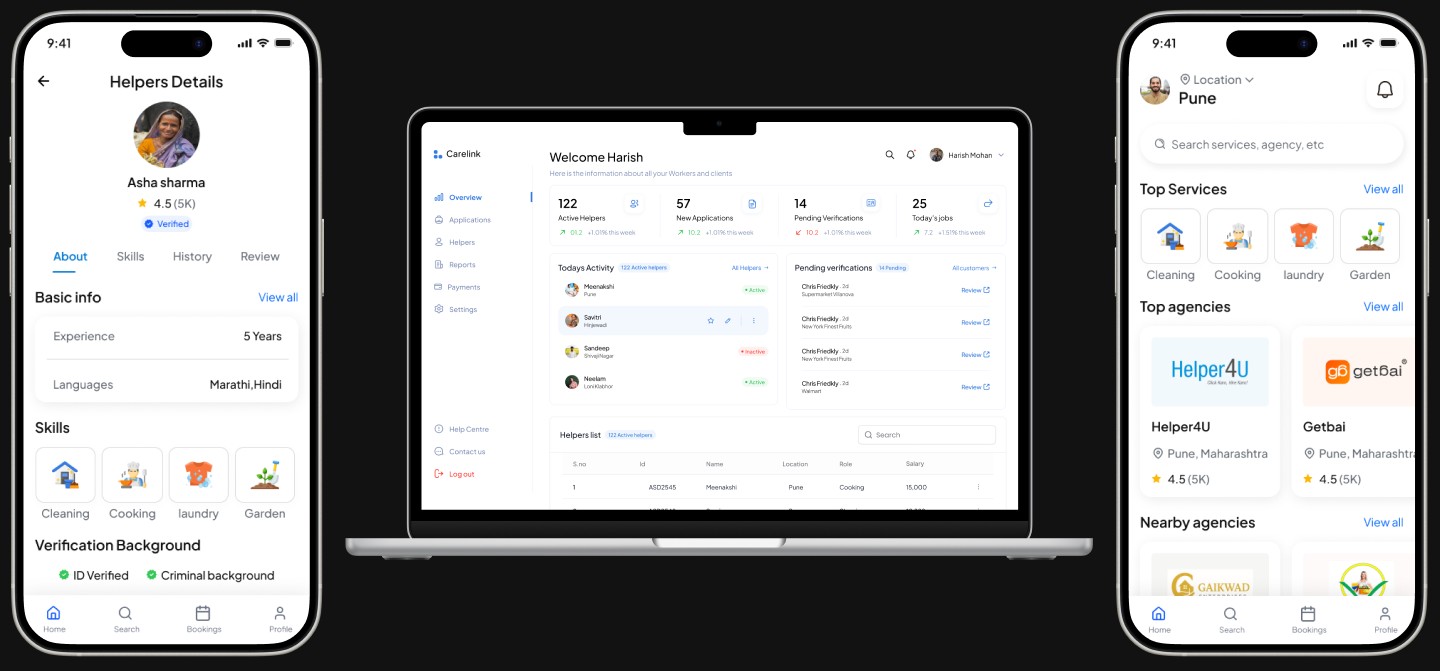
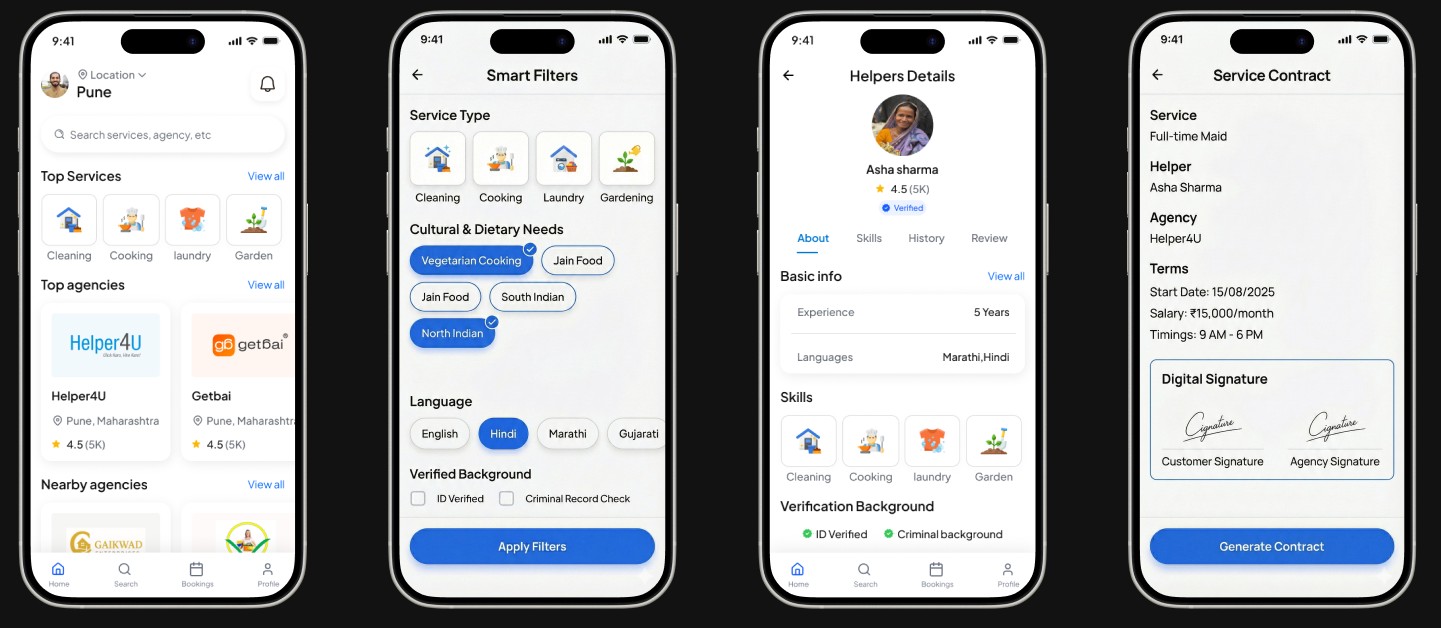
Verified helper profiles (KYC + background checks)
Structured onboarding for agencies
Intelligent matching based on skills, language, and preferences
Transparent payment tracking
Emergency support and dispute resolution
Training and awareness modules for helpers
Final Solution 1 Final Solution 2

Why CareLink?

CareLink is not just another hiring platform. It is a system built around the dignity, safety, and empowerment of domestic helpers while giving employers the structure and confidence they need.

Built on Trust

Verified profiles and background checks create a foundation of accountability for both helpers and employers.

Structured by Design

Clear onboarding, contracts, and records replace informal, verbal-only agreements that leave room for exploitation.

Empowering Helpers

Training modules, rights awareness, and emergency support give helpers visibility and agency within the system.

Accessible & Affordable

Designed to work for households across income levels, balancing premium features with essential access for all.

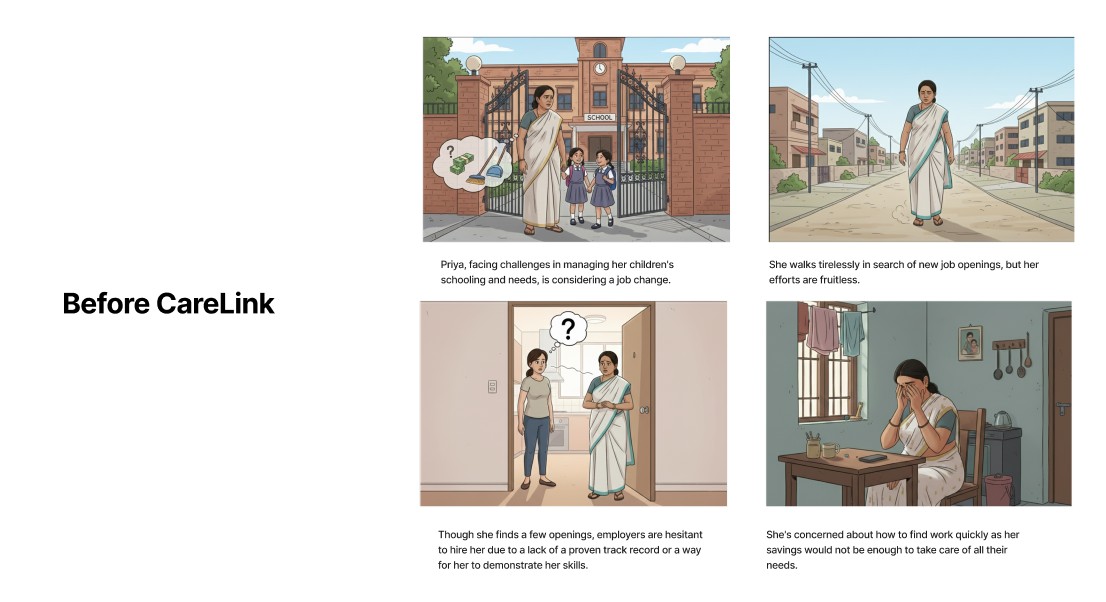
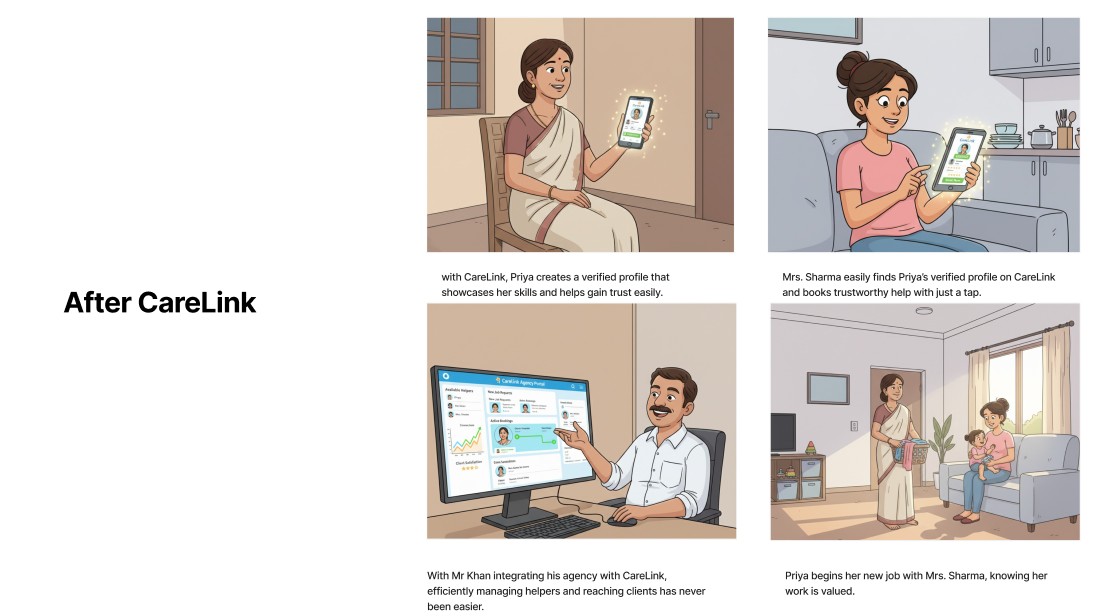
Scenario (Storyboard)

To ground the concept in real life, we developed a storyboard tracing the journey of a helper and an employer from first contact through resolution of a conflict, using CareLink at every step.
Storyboard Panel 1
Storyboard Panel 2

Reflections

  • Social & Economic Complexity This project helped me understand how deeply social and economic factors shape design problems. What initially seemed like a simple hiring issue turned out to be a complex system involving trust, awareness, and power dynamics.
  • Designing for All Stakeholders Considering every stakeholder, not just end users, was critical. The helpers, employers, agencies, and regulators each had different needs that the system had to address simultaneously.
  • Next Steps If given more time, I would focus on usability testing specifically for the helper-facing interface to ensure low digital literacy isn't a barrier to their empowerment.
Open in Figma