Key Design Moments
Four moments shaped Invento — from a simple scan-and-reveal prototype to a tested and more deliberate AR interaction.
Starting Simple
With one week to go from idea to a working WebAR experience, the first prototype stayed deliberately narrow: scan an inventor card, and the invention appears in AR with information and audio. The challenge wasn't getting a 3D model on screen — it was making the interaction understandable, responsive, and enjoyable.
Making It A Game, Not Just A Trigger
The first version worked, but the reveal felt too passive. We added a matching layer: the user identifies the correct invention before seeing it come to life, and a wrong match gives a hint instead of a dead end.
Testing With Real People
Once the prototype worked, we put it in people's hands and watched what they actually did. Five problems surfaced:
Models sometimes loaded after the information and audio had already appeared.
Some moved the camera away before the AR appeared.
People weren't sure whether to scan the inventor or invention first.
Too many elements competed with the AR experience itself.
People interpreted it as the scanner itself still loading.
The Wall We Hit: The Reveal Outran The Model
The info card and audio could appear before the 3D model had finished loading, making the reveal feel broken.
Rather than trying to speed up the model itself, we preloaded all three invention models when the experience starts. By the time a match is found, the reveal is ready.
Turning Observations Into Changes
Each observation became a specific interface change — shown here against the screens it came from.
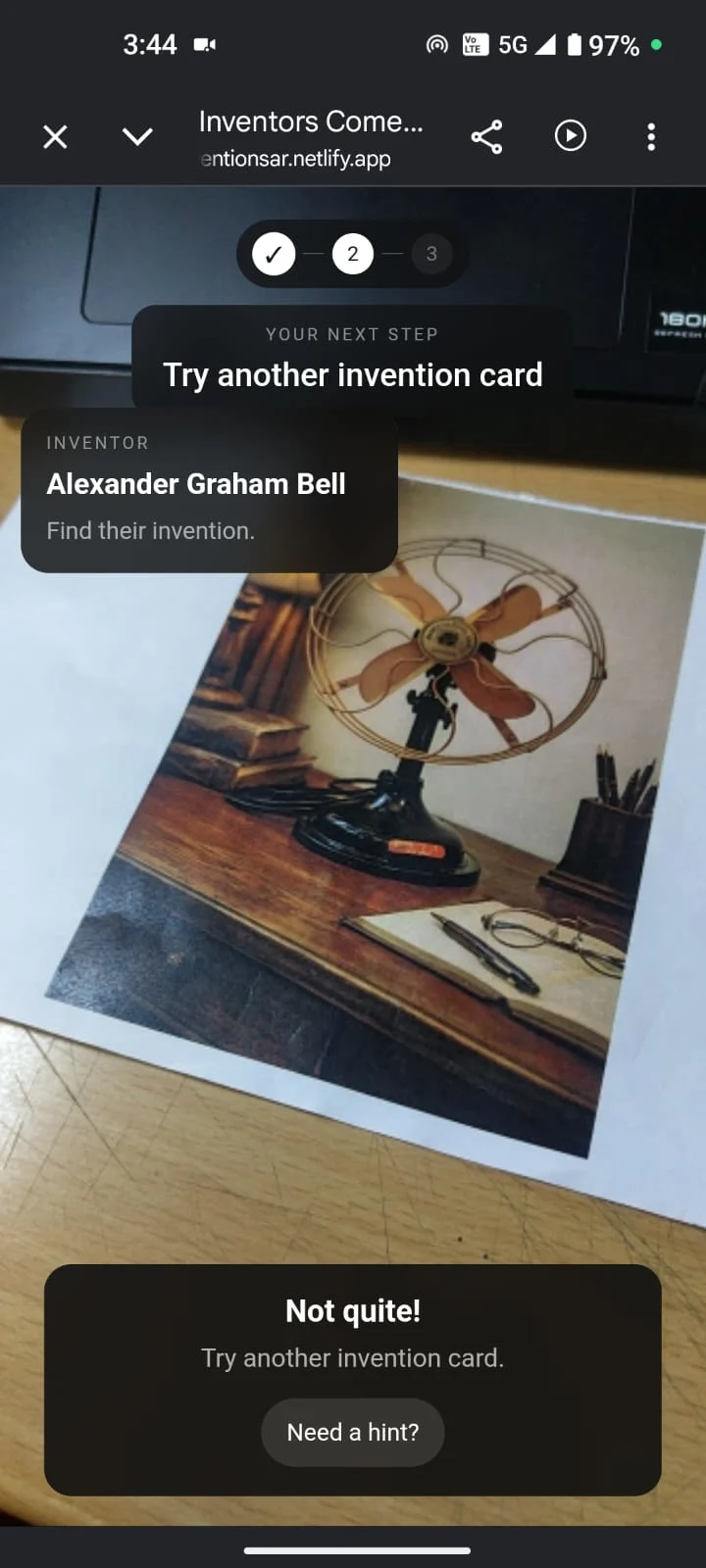
Scanning order wasn't obvious and people tried both cards at once.
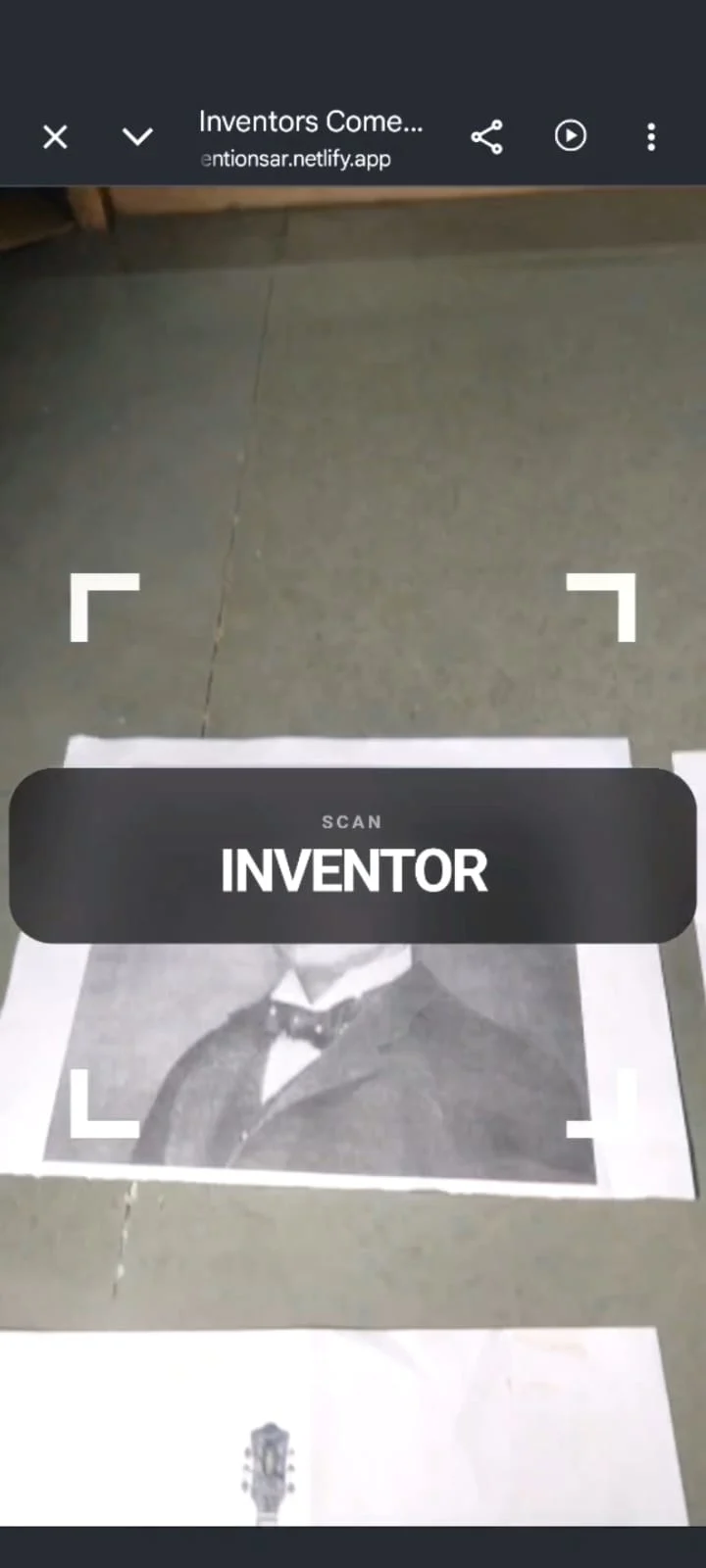
One instruction at a time: "Scan Inventor," then "Scan Invention."
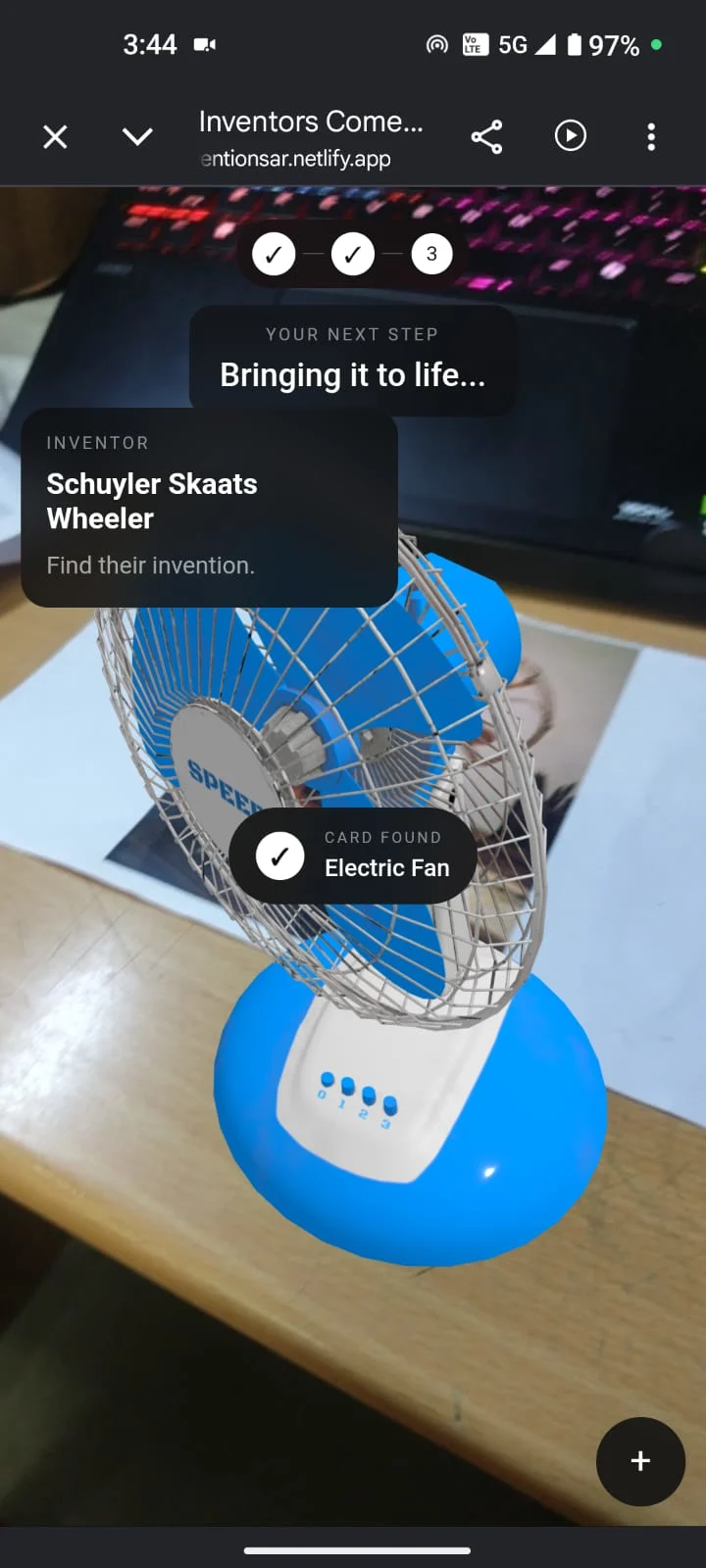
Instructions, progress and AR all competed for attention, making it cluttered.
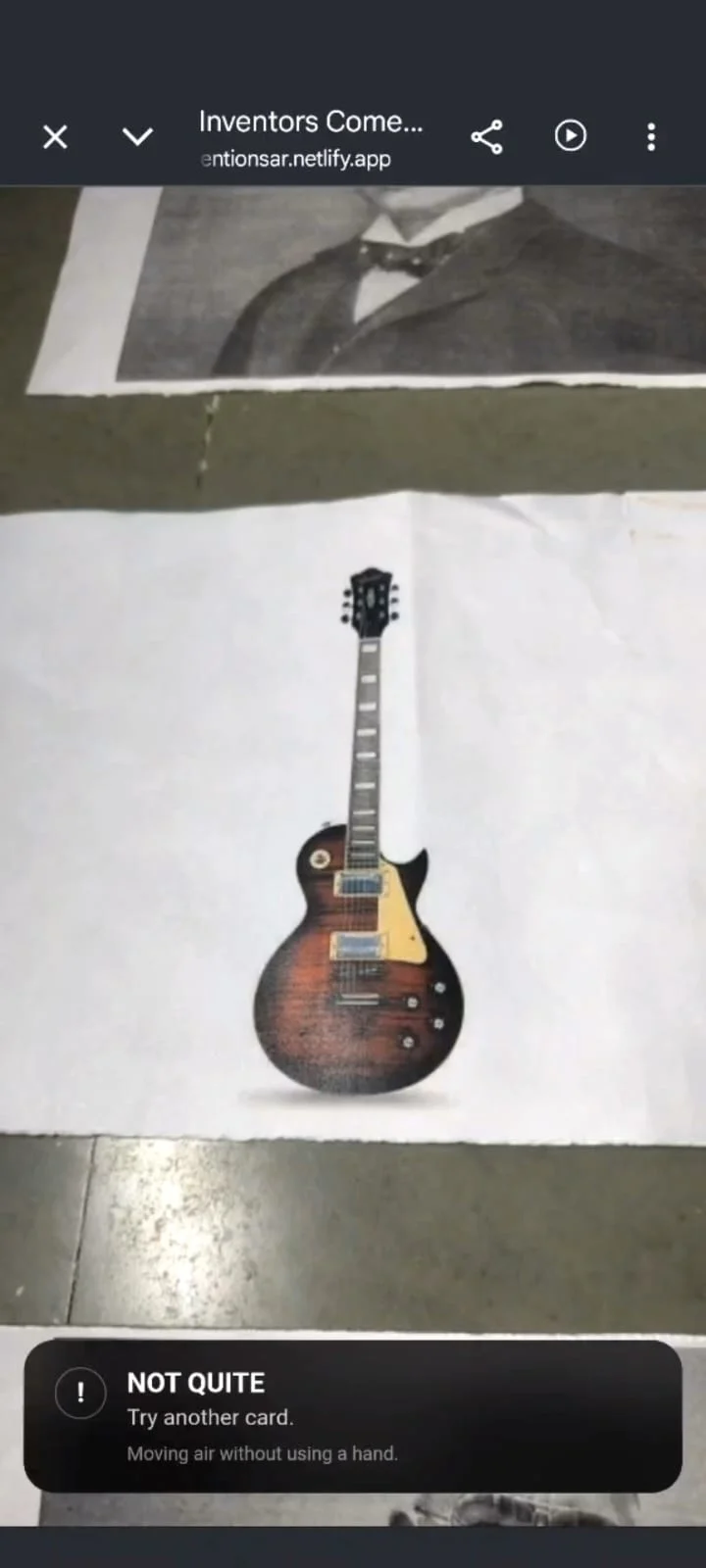
Simplified interface — only what's needed for the current step.
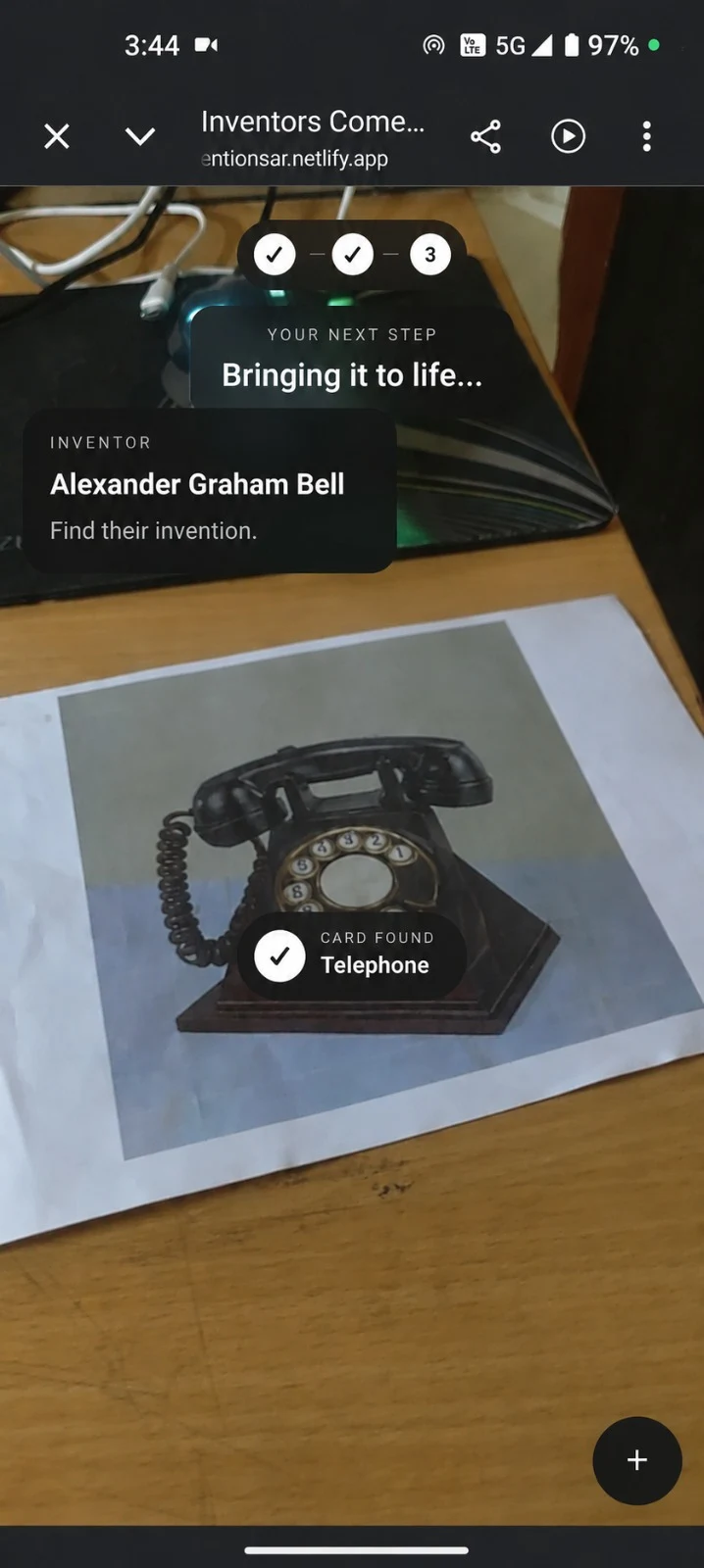
Audio and information appeared before the 3D model was ready.
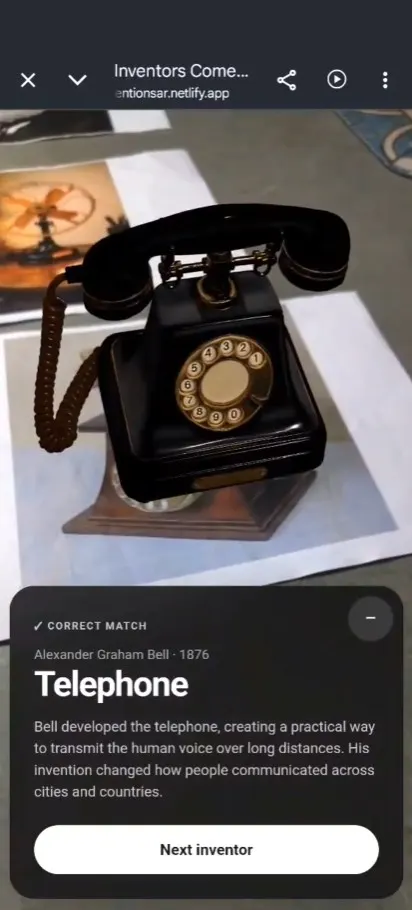
Models are preloaded and ready when the match is confirmed.